Smelling Home: How Sweetgrass and Cedarwood Are Helping Georgians Heal What Words Can't Reach
There's a reason certain smells stop you cold — not just with recognition, but with feeling. For many Georgians, the earthy sweetness of native sweetgrass or the warm depth of old-growth cedarwood doesn't just smell familiar; it feels like coming home to something much older than themselves. Researchers and aromatherapists working across the South are starting to understand why, and what they're finding is quietly reshaping how we think about trauma, memory, and healing.
Why Smell Is Different From Every Other Sense
Here's something most people don't realize: scent is the only one of our five senses with a direct line to the brain's emotional and memory centers. Every other sense — sight, touch, taste, sound — gets routed through the thalamus first, almost like a switching station. Smell bypasses all of that. Olfactory signals travel straight to the amygdala and hippocampus, the parts of the brain that process emotion and long-term memory.
That's not a small thing. It means a scent can trigger a fully formed emotional response before your conscious mind has even registered what you're smelling. Dr. Rachel Osei, a neuroscientist based in Atlanta who consults with integrative wellness practitioners, explains it plainly: "When we talk about scent-triggered memory, we're not talking about a vague sense of nostalgia. We're talking about a neurological event. The emotional weight of a smell can be immediate and intense in ways that even visual memory rarely matches."
This phenomenon — sometimes called the Proust Effect, after the French writer who famously described a rush of childhood memory triggered by the smell of a madeleine dipped in tea — is well-documented in clinical literature. But what's newer, and far more interesting to wellness practitioners in Georgia, is how this mechanism might connect to something deeper: the idea of ancestral or intergenerational memory.
The Plants That Carry Georgia's Story
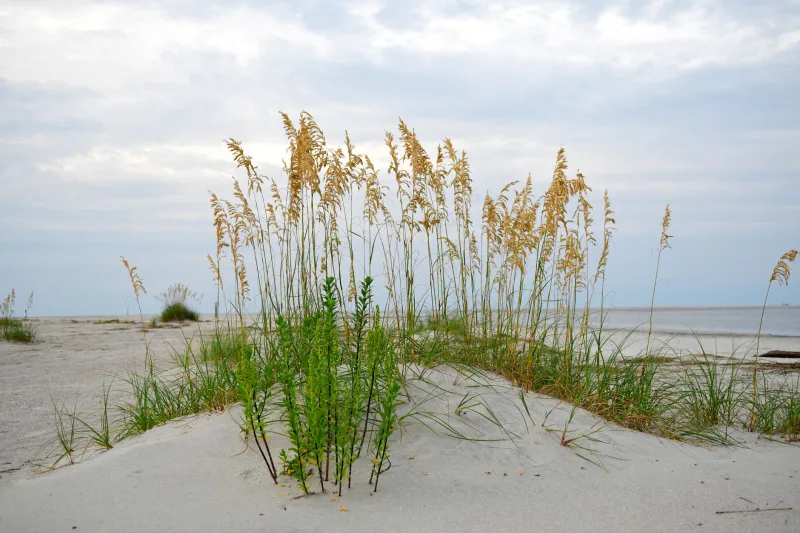
Sweetgrass (Muhlenbergia filipes) grows in the coastal marshes and lowland areas of Georgia and the broader Lowcountry. For centuries, it was harvested by Gullah Geechee communities to weave intricate baskets — a craft tradition that traveled with enslaved Africans from West Africa and took root in American soil. The grass itself has a soft, almost vanilla-like scent when dried, something between fresh hay and warm bread. It's distinctive in a way that's hard to describe and impossible to forget once you've encountered it.
Cedarwood — specifically the Eastern red cedar (Juniperus virginiana) found throughout Georgia's piedmont and mountain regions — carries a different kind of weight. Its oil is dense, resinous, and grounding. For generations of rural Georgians, cedar was practical: it lined hope chests, repelled moths, built fence posts, framed houses. The smell of cedar wasn't aromatherapy. It was just life.
Lisa Beaumont, a licensed aromatherapist and herbalist who runs a small practice in Savannah, has been incorporating both of these scents into her trauma-informed sessions for about four years. She started almost by accident. "A client came in dealing with grief after losing her grandmother," Lisa says. "I happened to have some sweetgrass in the room — not even as a therapeutic tool, just because I like the smell. The client broke down crying almost immediately and said she hadn't been able to cry since the funeral. Something about that scent unlocked something in her."
That experience sent Lisa down a research path that eventually led her to connect with practitioners studying epigenetics and somatic trauma therapy. What she found was a body of emerging science suggesting that trauma — particularly generational trauma held in communities with shared cultural histories — may leave biological imprints that can be accessed through sensory experience.
Epigenetics, Emotion, and the Smell of the Past
Epigenetics is the study of how environmental experiences can alter gene expression without changing the underlying DNA sequence — and how those alterations can be passed down through generations. Research on Holocaust survivors and their descendants, as well as studies on communities affected by slavery and systemic violence, has begun to suggest that trauma can leave measurable biological marks that children and grandchildren carry forward.
This is still a young field, and scientists are careful about overclaiming. But the intersection of epigenetic research and olfactory neuroscience is generating serious attention. A frequently cited study from Emory University found that mice trained to fear a specific smell — cherry blossom, in that case — passed that fear response to their offspring, even without any direct exposure to the conditioning. The descendants' brains showed structural changes in smell-processing regions that corresponded to the original fear memory.
Dr. Osei is measured but curious about the implications. "We're not in a position to say definitively that a specific plant scent will unlock specific ancestral memory," she notes. "But we can say that olfactory pathways are deeply tied to emotional processing, that trauma has biological and potentially heritable dimensions, and that culturally significant scents may carry associations that resonate across generations in ways we're only beginning to map."
For practitioners like Lisa, that's enough to work with — carefully and respectfully. "I'm not making medical claims," she says. "What I'm saying is that when I use sweetgrass with clients who have Gullah Geechee heritage, or cedarwood with folks whose families go back generations in the Georgia mountains, something tends to happen. A release. A recognition. Call it what you want."
Why Regional Scents May Work Differently Than Mass-Market Alternatives
Walk into any big-box wellness store and you'll find shelves full of lavender, eucalyptus, and peppermint — all fine plants with real therapeutic properties. But they're almost universally sourced from overseas, often standardized and stripped of the chemical complexity that makes whole-plant aromatics so potent.
Georgia-grown sweetgrass and locally distilled cedarwood oil carry a different aromatic profile than their commercial counterparts — one shaped by the specific soil, humidity, and climate of this region. That specificity matters. For someone whose ancestors walked this same land, breathed this same air, worked with these same plants, the chemical fingerprint of a locally sourced essential oil or dried botanical may carry resonance that a generic substitute simply cannot replicate.
"There's a reason we talk about terroir in wine," Lisa points out. "The same principle applies to aromatic plants. Where something grows shapes what it is. And for healing work that's rooted in place and culture, that matters enormously."
Bringing It Into Your Own Practice
You don't need a clinical setting to begin exploring this for yourself. Start simply. Source dried sweetgrass from a reputable Gullah Geechee artisan or a small Georgia-based botanical supplier — ideally someone harvesting sustainably from coastal regions. Hold it, warm it slightly in your hands, and just breathe. Notice what comes up without trying to force any particular response.
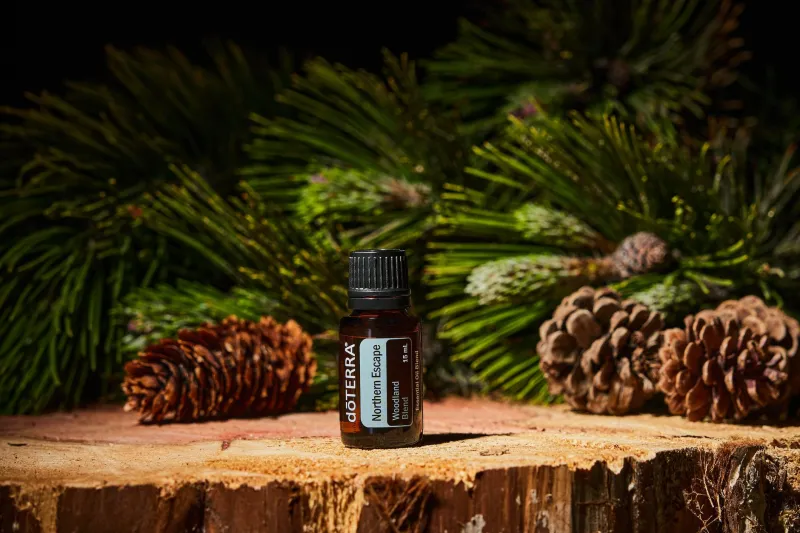
For cedarwood, look for small-batch essential oils distilled from Eastern red cedar grown in the Southeast. A drop on a diffuser stone or a cedar plank used as a simple room accent can be enough. Pair it with quiet time — journaling, sitting outside, or simply resting without screens.
If you're working through something heavier — grief, inherited family pain, a sense of disconnection from your roots — consider seeking out a trauma-informed aromatherapist who has experience with somatic or body-based approaches. The scent is a doorway. Having a skilled guide on the other side of it can make all the difference.
The land here has been holding stories for a very long time. Sometimes all it takes is the right smell to start listening.