Wildflowers at Your Doorstep: Tapping Georgia's Native Blooms for Everyday Wellness
Drive almost any rural Georgia road in late summer and you'll pass it without thinking twice: a blur of purple and gold along the fence line, a drift of lavender spikes in an unmowed field, clusters of bright yellow petals nodding in the afternoon heat. Most people call it scenery. Botanists call it a pharmacy.
Georgia's native wildflowers have been doing quiet work for centuries—supporting pollinators, stabilizing soil, and offering healing compounds to anyone who knew where to look. Indigenous communities across the Southeast built entire wellness traditions around these plants long before the first apothecary opened its doors. Today, as interest in natural remedies and botanical wellness continues to grow, those same plants are getting a second look from herbalists, aromatherapists, and curious home practitioners who want something local, sustainable, and genuinely effective.
Let's take a walk through the meadow.
The Stars of Georgia's Wild Pharmacy
Blazing Star (Liatris spicata) is one of Georgia's most striking natives—tall purple spikes that bloom from the top down, which is unusual in the plant world and makes identification easy. Beyond its visual drama, blazing star has a history of use in Indigenous herbal medicine for everything from sore throats to kidney support. Its roots were particularly valued. Today, dried blazing star flowers are finding their way into herbal teas and botanical potpourri blends, where they contribute both color and a faintly sweet, grassy aroma.
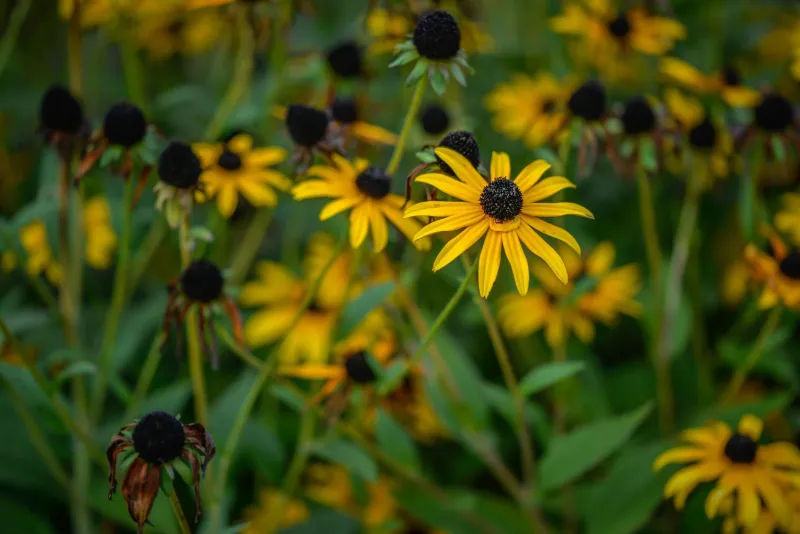
Black-Eyed Susan (Rudbeckia hirta) is practically the face of Georgia's summer meadows—those cheerful golden petals surrounding a dark center are everywhere from late June through September. What fewer people know is that black-eyed Susan belongs to the same plant family as echinacea, and some herbalists use it similarly, as a mild immune-supportive herb. The dried flowers steep into a golden, slightly earthy tea, and the plant's above-ground parts have been used in poultices for minor skin irritations. It's not a substitute for medical care, but as a gentle wellness ally, it's worth knowing.
Wild Bergamot (Monarda fistulosa) is the wildflower that aromatherapy enthusiasts get genuinely excited about. Related to the bee balm used in cooking, wild bergamot carries a powerful, oregano-meets-lavender scent from its abundant volatile oils. Steam distillation of Monarda species produces an essential oil with documented antimicrobial properties, and even without distillation equipment, you can experience its aromatic benefits. Rub a fresh leaf between your fingers and inhale—that's thymol and carvacrol at work, the same compounds found in thyme and oregano oils. Dried wild bergamot leaves make a wonderfully fragrant tea, and bundles of the dried plant hung in a room act as a natural air freshener with genuine antibacterial action.
Passionflower (Passiflora incarnata) grows as a vine across much of Georgia, producing some of the most exotic-looking blooms in North America—intricate purple and white structures that look like they belong in a tropical greenhouse, not a Georgia ditch. But here they are, thriving in disturbed soil and climbing fence rows across the state. Passionflower has a well-established reputation as a gentle nervine—an herb that supports relaxation and eases anxiety. It's one of the few native plants with a solid body of modern research behind its traditional use, and it's widely available in supplement form. But there's something special about making your own tea from leaves and flowers you gathered yourself.
Aromatherapy and the Native Wildflower Connection
When most people think about aromatherapy, they picture lavender from Provence or eucalyptus from Australia. The idea that Georgia's own roadsides might offer comparable aromatic medicine feels surprising at first—but it shouldn't.
The volatile compounds responsible for therapeutic scent effects aren't exclusive to exotic or imported plants. They're produced by any plant that needs to attract pollinators, repel pests, or manage its own stress responses. Georgia's native wildflowers, adapted over millennia to local conditions and local insects, are packed with these compounds.
Wild bergamot's essential oil profile overlaps significantly with commercial thyme oil. Passionflower's floral scent has genuine calming properties that can be experienced through simple steam inhalation. Even black-eyed Susan, not typically considered an aromatic herb, releases subtle compounds when dried that contribute to the grounding, earthy quality of wildflower botanical blends.
For home aromatherapy practitioners, incorporating locally sourced dried wildflowers into diffuser blends, sachets, or bath botanicals is a way to connect regional identity with wellness practice. It's also considerably more affordable than importing specialty botanicals from overseas.
Foraging Smart: The Rules That Keep It Sustainable
Before you head out with a basket, a few ground rules. Responsible foraging is what keeps these plant populations healthy for future seasons—and for the pollinators that depend on them.
Only harvest what you can confidently identify. Misidentification is a real risk, and some plants that resemble useful wildflowers are toxic. Invest in a regional field guide specific to the Southeast, or better yet, connect with a local foraging group or botanical society. Georgia has active communities of plant enthusiasts who lead identification walks and share knowledge freely.
Take no more than 10-15% of any plant population you find. This rule of thumb protects the plant community and ensures enough seed set for next year's growth.
Never forage from roadsides that may have been sprayed with herbicides, from private land without permission, or from protected natural areas. Stick to your own property, land you have explicit permission to harvest from, or areas where foraging is explicitly permitted.
Leave the roots. For most wildflower foraging, you want leaves, flowers, and stems—not roots. Removing roots kills the plant. The exception is if you're transplanting a small number of plants to your own garden, which is actually an excellent way to bring native species home.
Bringing the Meadow Home
You don't have to forage at all to work with Georgia's native wildflowers. Many of these plants are available as nursery starts from native plant specialists, and growing them in your own yard gives you a reliable, ethical harvest source season after season.
A small patch of blazing star, black-eyed Susan, wild bergamot, and passionflower vine can transform a corner of a suburban yard into a functional wellness garden that also happens to be gorgeous. These plants are adapted to Georgia's climate, which means they're drought-tolerant, largely pest-resistant, and require minimal intervention once established.
Harvest flowers and leaves in the morning after dew has dried. Dry them in small bundles hung upside down in a warm, airy space—a covered porch works perfectly in Georgia's summer heat. Once fully dry, store in airtight glass jars away from direct light. Properly dried, most wildflower botanicals hold their potency for a full year.
From there, the possibilities are genuinely open. Blend dried wild bergamot with passionflower leaves for a calming evening tea. Mix blazing star and black-eyed Susan petals into a botanical sachet for a dresser drawer. Add dried wildflower heads to homemade salves or bath soaks for color, scent, and gentle botanical benefit.
Georgia's meadows have been offering all of this for centuries. All it takes is slowing down enough to notice.