Free Food, Wild and Waiting: Your Month-by-Month Guide to Foraging in Georgia
Georgia's woods, creek banks, and overgrown field edges have been quietly offering up some of the most nutritious food on the planet for thousands of years — and most of us walk right past it. Chickweed in January. Ramps in March. Elderberries in August. Wild persimmons after the first frost. These aren't exotic ingredients from a specialty catalog. They're growing within a few miles of wherever you're reading this, and they've been feeding people in this region since long before grocery stores existed.
Foraging has had a bit of a cultural moment lately — cookbooks, Instagram reels, fancy restaurant menus featuring foraged garnishes. But strip away the trend cycle and what you're left with is something genuinely practical: a way to supplement your diet with hyperlocal, nutrient-dense food that costs nothing but your attention. This guide is designed to give you a real, usable framework for getting started across Georgia's four distinct seasons, whether you're in Atlanta's suburbs, the coastal plain, the piedmont, or the mountains.
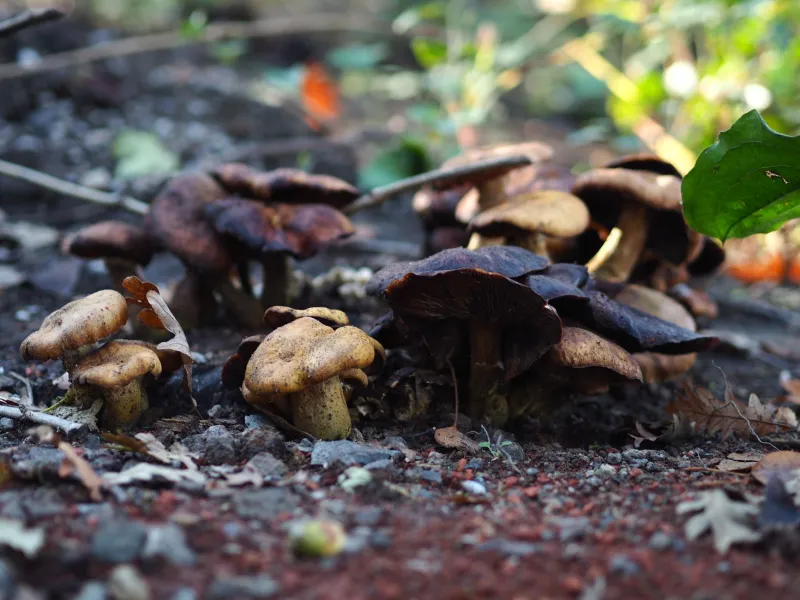
One rule before we begin: never eat anything you haven't positively identified. Get a good regional field guide — A Field Guide to Edible Wild Plants by Lee Allen Peterson is a classic, and Forage, Harvest, Feast by Marie Viljoen is more recipe-forward if that's your style. When in doubt, leave it out.
January & February: The Quiet Abundance of Winter
Most people assume winter foraging is a bust. It's not — you just have to know where to look and adjust your expectations. This is the season for cold-hardy greens and roots.
Chickweed (Stellaria media) is one of the great overlooked gifts of the Southern winter. It thrives in cool, moist conditions and can carpet garden beds, lawn edges, and disturbed soil in a dense, bright-green mat. The leaves are mild and slightly grassy — excellent raw in salads or wilted briefly in butter with garlic. It's loaded with vitamin C, calcium, and iron.
Henbit (Lamium amplexicaule) and purple dead nettle (Lamium purpureum) are two more winter-active plants often confused with each other and frequently dismissed as weeds. Both are edible, mildly flavored, and easy to find in open fields and garden margins across the state.
This is also a good time to forage dried muscadine vines for herbal tea — the leaves, dried and steeped, have a pleasant, slightly tannic quality and have been used in folk medicine traditions across the South for generations.
Simple use: Toss a handful of fresh chickweed into a smoothie, or wilt it with olive oil and red pepper flakes as a quick side green.
March & April: Spring's Most Exciting Window
If there's a peak season for foragers in Georgia, this is it. The woods wake up fast in March, and the window for some of the most prized wild edibles is short.
Ramps (Allium tricoccum) — also called wild leeks — emerge in the rich, moist coves of North Georgia's mountain forests, typically from mid-March through early April. They smell powerfully of garlic and onion, which is both their calling card and their identification aid. The broad, smooth leaves are edible, as are the white bulbs. Ramps are deeply embedded in Appalachian food culture — they've been eaten at spring tonics and community gatherings for centuries.
Harvest ramps responsibly. Because they take years to establish and are increasingly popular, take no more than one leaf per plant and leave the bulb in the ground whenever possible. Better yet, harvest from large, dense patches and move on.
Wood sorrel (Oxalis stricta) is easier to find and far more abundant. Its clover-like leaves have a bright, lemony tartness from oxalic acid — wonderful in salads or as a garnish. It grows in shaded spots throughout the state.
Spicebush (Lindera benzoin) blooms in late winter to early spring in Georgia's creek bottoms and moist woodland edges. The berries come later in fall, but the aromatic twigs and bark can be simmered into a warming tea with notes of allspice and clove — a genuinely lovely thing on a cool March morning.
Simple use: Ramp butter. Blanch ramp leaves briefly, blend with softened butter, a pinch of salt, and a squeeze of lemon. Freeze in a log shape and slice off pats to finish pasta, grilled fish, or a fried egg.
May & June: Abundance Hits Its Stride
By late spring, Georgia's foraging landscape shifts from delicate greens to heartier finds.
Elderflower (Sambucus canadensis) clusters appear in May and early June along roadsides, stream banks, and woodland edges statewide. The creamy white flower clusters have a sweet, floral scent and can be used to make elderflower cordial, infused into honey, or fried into fritters. This is the same elder plant whose berries become elderberries in late summer — one of the most respected immune-support botanicals in both folk medicine and modern research.
Blackberries begin ripening in late May in South Georgia and work their way north through June. They're familiar enough that most people don't think of them as foraging, but wild blackberries are notably more complex in flavor than cultivated varieties — sharper, more aromatic, with a depth that commercial berries rarely match.
Poke salad (Phytolacca americana) deserves a mention here with a firm caveat. Young poke shoots, harvested before the plant is about 6 inches tall, were traditionally boiled in multiple changes of water and eaten as a spring green across the rural South. The mature plant is toxic. This is one for experienced foragers only, and it's worth understanding why older generations prepared it the way they did before attempting it yourself.
July & August: Heat, Berries, and Elderberry Season
Midsummer in Georgia is brutal, and the foraging calendar reflects that — this is a season for early mornings and knowing where to look.
Elderberries ripen in clusters of deep purple-black by August. They're not particularly pleasant raw but transform beautifully when cooked into syrup, jelly, or shrubs (drinking vinegars). Elderberry syrup has become a staple of the natural wellness community for good reason — it's rich in antioxidants and has a long history of use for respiratory support.
Passionflower (Passiflora incarnata) — maypop, as it's called locally — produces edible yellow-green fruits in late summer. The pulp is sweet and tropical-tasting, and the dried leaves and flowers have a long history of use as a gentle calming herb in Southern folk tradition.
September & October: The Wild Harvest Peaks
Fall is when Georgia's foraging calendar gets generous again.
Wild muscadine grapes (Vitis rotundifolia) ripen from late August through October, hanging in clusters from vines that can climb thirty feet up a tree. They're thicker-skinned than cultivated grapes and intensely flavored — the scent alone is something special, musky and rich. Eat them fresh, press them for juice, or make muscadine jelly. The skins and seeds are loaded with resveratrol.
Persimmons (Diospyros virginiana) are one of fall's great rewards — and one of its great lessons in patience. Eat a wild persimmon before it's fully ripe and you'll never forget the experience (puckering doesn't begin to describe it). Wait for them to soften and sweeten, ideally after the first real frost, and you'll find a flavor somewhere between apricot, brown sugar, and spice. Persimmon pudding is a genuine Southern tradition worth reviving.
Pawpaws (Asimina triloba) grow along creek bottoms and shaded slopes, and their brief September season is almost cult-like among foragers who've tasted them. The flesh is custard-soft with a flavor often compared to banana mixed with mango. They don't ship or store well, which is exactly why you'll never find them in a grocery store — and exactly why finding a wild pawpaw patch feels like a genuine discovery.
November & December: Roots, Bark, and Preservation Season
Late fall is the time to harvest roots — their energy has drawn back down from leaves and stems, concentrating in the ground.
Sassafras (Sassafras albidum) roots, dug in fall and winter, can be simmered into a fragrant, earthy tea with a mild root beer quality. Sassafras has a complicated regulatory history (safrole, a compound in sassafras oil, was banned by the FDA as a food additive in the 1960s), but traditional preparations using dried root bark tea in moderation have a long history in Southern folk wellness.
Spicebush berries, if you marked your spring patches, are ready to harvest now — dried and ground, they function beautifully as a spice in both sweet and savory cooking.
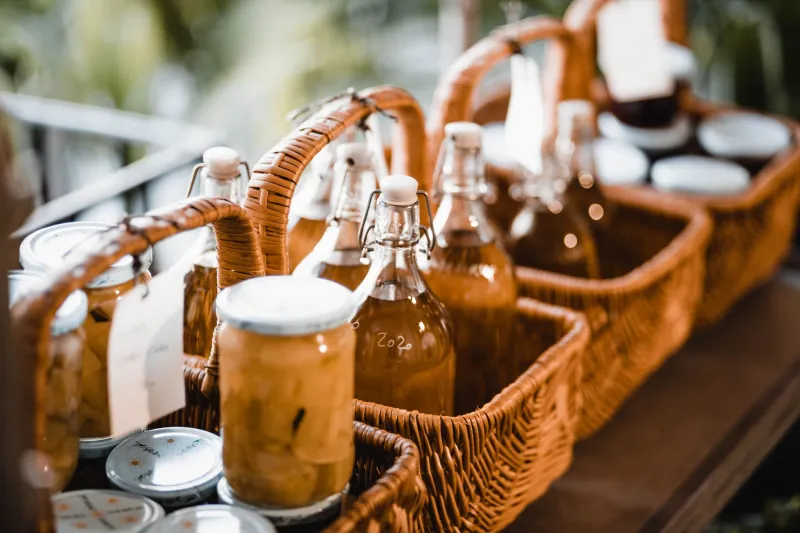
This is also the season to put things up. Dry, freeze, ferment, and preserve whatever you've gathered through the year. Your ancestors didn't have the luxury of treating a harvest as a single meal — they built pantries from it. That instinct is worth recovering.
A Few Ground Rules for Responsible Foraging
- Harvest from clean areas. Avoid roadsides with heavy traffic, areas that may have been treated with herbicides, or land near industrial sites.
- Take only what you'll use. A good rule of thumb is to harvest no more than 20–30% of any stand you find.
- Know the land you're on. Get permission on private property. Many Georgia state parks have foraging policies — check before you go.
- Invest in proper identification. A good field guide and a local foraging group (Georgia has several active ones) are worth far more than any app.
The food is out there. It always has been. Your job is just to slow down enough to see it.