Same Bottle, Different Story: How Georgia's Seasons Change the Way Your Essential Oils Smell and Blend
You crack open the same bottle of cedarwood you've been reaching for all year, and something feels... different. It's July, the AC is losing the battle with the Georgia heat, and the oil smells sharper somehow — almost thinner. Come December, that same bottle is deeper, almost resinous. You haven't changed anything. So what gives?
Short answer: Georgia did it.
This state puts essential oils through the wringer. We're talking humid, heavy summers that push heat indexes past 105°F, followed by winters that can drop into the 20s with zero warning. That kind of thermal drama doesn't just affect your mood or your garden — it actively changes the chemical behavior of every oil sitting in your cabinet. And if you've been blending without accounting for that, you've been leaving a lot of potential on the table.
What Temperature Actually Does to an Essential Oil
Essential oils are complex mixtures of volatile organic compounds — terpenes, esters, alcohols, phenols — and each of those compounds evaporates at a different rate depending on the surrounding temperature. When your storage space heats up, the lighter, more volatile top notes (think citrus, eucalyptus, the bright head of a lavender) escape faster. What you're left with is a blend that skews heavier, more base-forward, sometimes almost musky.
In cooler conditions, those top notes stay put longer. They're slower to volatilize, which means you get a fuller, more layered scent experience right out of the bottle. This is why that same lavender can smell almost medicinal in August and genuinely floral in February.
It's not spoilage — at least not at first. It's chemistry doing what chemistry does. But if the heat is extreme enough or sustained long enough, oxidation starts creeping in, and that's where real degradation happens. Oxidized oils don't just smell off; they can become skin irritants. In Georgia summers, that process can accelerate faster than most people realize.
The Oils Most Affected by Georgia's Heat
Not all oils respond the same way. Some are more vulnerable to thermal swings than others, and knowing which is which helps you plan smarter.
Citrus oils — lemon, bergamot, sweet orange — are the most temperature-sensitive. They're already the shortest-lived oils in your collection, and Georgia heat speeds up their oxidation significantly. If you're keeping these on a sunny windowsill from May through September, you're essentially fast-forwarding to the end of their useful life.
Lavender and clary sage lose their lighter floral notes first in the heat, shifting toward a more herbaceous, almost green character. It's still usable, but it behaves differently in a blend — it plays more like a middle note than a true top note.
Cedarwood, sandalwood, and vetiver — your heavier base notes — are more stable but not immune. In high heat, they can become almost sticky-thick, making them harder to measure accurately and slower to blend evenly.
Peppermint and eucalyptus tend to lose some of that sharp, clean punch in summer storage. The menthol compounds are volatile enough that sustained heat draws them out, leaving a slightly muted version of what you expected.
Adjusting Your Blends When the Seasons Shift
Once you understand what's happening chemically, you can stop fighting the seasonal shift and start working with it.
In summer, lean into the fact that your top notes are already expressing themselves more aggressively — or depleting faster. Use slightly less of your citrus and mint elements than you normally would, since they're already front-loaded by the heat. Anchor your blends with a stronger base note ratio to compensate for the lighter notes fading sooner on skin or in a diffuser.
In winter, your oils are holding their complexity longer, which means you have more room to be precise. This is a great time to work on detailed, layered blends where the top-middle-base progression actually has time to unfold. You might find you need slightly more of your top notes to get the same opening impression you'd get effortlessly in July.
A practical tip: keep a small blending journal and note the season and approximate room temperature when you create a blend. Over time, you'll start to see patterns specific to your home and your oils — and that knowledge is genuinely hard to find in any textbook.
Storage Hacks Built for the Southern Climate
Georgia homes aren't built like Pacific Northwest cottages. We deal with heat that seeps into everything, and standard essential oil storage advice often doesn't account for that reality.
Ditch the cabinet above the stove. It seems obvious, but it's one of the most common mistakes. Even if the cabinet feels cool, the ambient heat from cooking cycles affects the temperature inside more than you'd think.
Go dark and go low. Heat rises, so lower shelves in interior rooms stay cooler. A dark, interior linen closet or a low shelf in a bedroom away from exterior walls is genuinely one of the better options in a Southern home.
Consider a dedicated mini-fridge. This sounds extra, but a small wine or beverage cooler set around 55–60°F is actually ideal for citrus oils and any blends you've already made. It sounds fussy until you've watched a $30 bottle of bergamot go flat in two months.
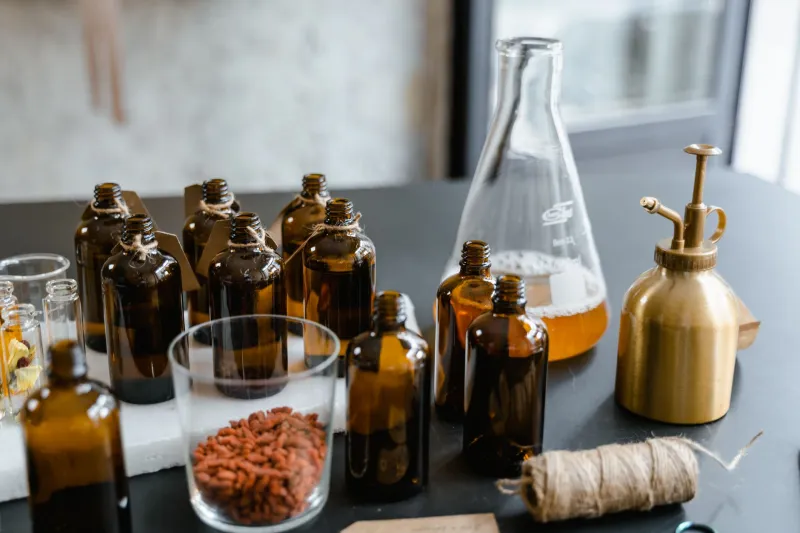
Amber glass is non-negotiable. If you're decanting into any kind of clear container for blending convenience, stop. UV exposure plus Georgia sunshine is a fast track to degradation.
Check your seals going into summer. A slightly loose cap is no big deal in February. In August, it's the difference between an oil that lasts another year and one that oxidizes by September.
Turning the Frustration Into a Feature
Here's the reframe that makes all of this worth understanding: Georgia's seasonal extremes aren't just a storage problem to manage — they're an invitation to develop a more intuitive relationship with your oils.
When you notice that your cedarwood smells different in July than it did in March, you're not encountering a flaw. You're experiencing the living chemistry of a plant-derived product responding to its environment, the same way the plant itself would have. That awareness — that sensitivity to subtle change — is exactly what separates someone who follows a recipe from someone who actually blends.
The South has always had a complicated relationship with its climate. We complain about the heat, we romanticize the winters, and somehow we build everything we love around both. Your aromatherapy practice can work the same way. Learn what your oils do in each season, store them with intention, and adjust your hand when the weather shifts.
The bottle hasn't changed. Georgia just gave it a little something extra to say.