Cold Air, Changed Scents: How Georgia Winters Mess With Your Essential Oils (And How to Fix It)
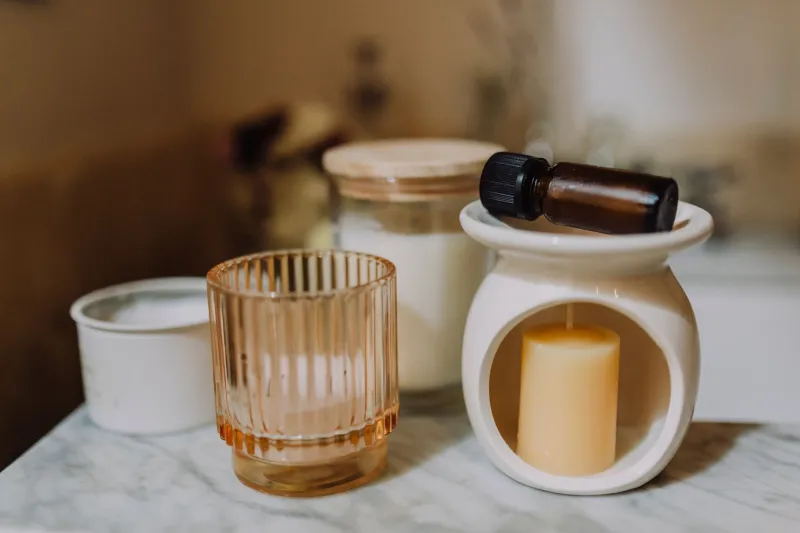
You pull out your go-to lavender and cedarwood blend — the one that's been your nighttime ritual since August — fire up the diffuser, and something just feels off. The scent doesn't fill the room the way it used to. Or maybe it hits too sharp, too fast, then disappears. You haven't changed a thing, so what gives?
Welcome to the scent shift. It's real, it's seasonal, and if you live in Georgia, it's worth understanding because our winters are a little different from anywhere else in the country.
Why Georgia Winter Air Changes Everything
Georgia doesn't do winter the way the Midwest does. We don't get consistent cold — we get fluctuating cold. A week of 28-degree nights followed by a 62-degree Tuesday afternoon. Humidity that swings from bone-dry during a cold snap to damp and heavy when the temps creep back up. Barometric pressure that can shift dramatically within 48 hours.
All of that matters more than most people realize when it comes to essential oils.
Aromatic molecules — the compounds that give essential oils their scent and therapeutic properties — are highly sensitive to temperature. When the air in your home gets colder, those molecules move more slowly. They don't volatilize, or evaporate into the air, as readily. That's why a blend that smelled rich and full in October can seem muted or thin by January, even if you're using the exact same oil from the exact same bottle.
On the flip side, when you crank the heat indoors to compensate for the cold outside, you create a dry environment that can actually make certain top notes — your citrus oils, your lighter mints — evaporate so fast they barely register before they're gone. You smell a flash of brightness and then nothing.
Georgia's humidity swings compound this further. Dry winter air inside a heated home changes how aromatic particles travel and how your nose receives them. Your olfactory receptors actually function differently in low-humidity conditions, which can make familiar blends smell sharper or more medicinal than usual.
The Diffuser Isn't the Problem — Your Settings Are
Before you blame your oils or your equipment, look at how you're running your diffuser. Most people set their diffuser once and forget it, using the same runtime and interval settings year-round. That works fine in spring and fall, but winter calls for some adjustments.
Run it longer, not harder. In cold, dry air, a continuous 15-minute burst can actually overwhelm the senses and then disappear quickly. Try switching to a longer, lower-intensity cycle — 30 minutes on, 15 minutes off — to give the scent time to settle and layer into the room rather than spike and fade.
Position matters more in winter. Cold air sinks. If your diffuser is sitting on a low shelf or the floor, aromatic molecules are dispersing into the coldest, heaviest layer of air in the room and not circulating as well. Elevate your diffuser to counter height or above to help the mist travel more effectively through the warmer air higher up.
Consider a warm-mist or heat diffuser for certain oils. Ultrasonic diffusers are great for most applications, but in a particularly cold room, a gentle heat-based diffuser can help heavier, resinous oils like frankincense, vetiver, or sandalwood release more fully. Just don't use direct heat with delicate floral or citrus oils — you'll damage them.
Rethink Your Blending Ratios for the Season
Winter is the time to lean into your base and middle notes and dial back your top notes a little. Here's the practical logic: base notes like patchouli, benzoin, and cedarwood are already slow to evaporate. In cold, dry air, they anchor your blend and give it staying power. Middle notes like clary sage, lavender, and marjoram carry the therapeutic heart of most wellness blends and perform consistently across temperature ranges.
Top notes — bergamot, lemon, peppermint, eucalyptus — are the first to go in winter conditions. They're still valuable, but if you're building a blend for a cold Georgia evening, reduce your top note ratio by about 10-15% and compensate with a slightly heavier hand on your middle notes.
A winter-ready adjustment to a classic recipe might look like this: if your fall blend was 4 drops bergamot, 3 drops lavender, 2 drops cedarwood, try shifting to 2 drops bergamot, 4 drops lavender, 3 drops cedarwood. Same general profile, better cold-weather performance.
Georgia-Specific Oils That Thrive in Winter Conditions
Some aromatics are naturally suited to cold-weather use, and a few of them happen to have deep roots right here in Georgia and the broader South.
Georgia pine and longleaf pine needle oil are exceptional in winter. They're grounding, they carry well in cool air, and they smell like the outdoors in the best possible way — which matters when you're stuck inside during a January cold snap.
Balsam fir and Virginia cedarwood perform beautifully in dry, heated indoor environments. They're resinous enough to linger and warm enough to counteract the flatness that cold air can create.
Dried Georgia botanicals used in passive diffusion — think simmering potpourri, sachets, or stovetop simmers with dried citrus peel, cloves, and rosemary — can actually outperform electric diffusers in winter because the gentle heat helps release aromatic compounds in a way that works with the season rather than against it.
Don't Forget Your Oils Themselves
Winter storage is a factor too. If you keep your oils in a cabinet near an exterior wall or in a room that gets cold at night, the oils themselves are chilling down between uses. Cold oil is thicker, and it doesn't blend or disperse as well. Give your bottles a few minutes at room temperature before using, or warm them gently between your palms before adding drops to your diffuser.
Also worth noting: some oils, particularly citrus-based ones, have a shorter shelf life and are more susceptible to oxidation. If a blend that used to smell bright now smells dull or slightly off even after warming, the issue might be the oil itself rather than the season. Citrus oils oxidize faster than most people expect, especially if the bottle has been opened and closed repeatedly since summer.
Work With the Season, Not Against It
The instinct when something stops working is to add more — more oil, more diffuser time, more intensity. But winter aromatherapy is really about working smarter, not harder. Adjust your technique, rethink your ratios, and lean into the oils that are built for cooler conditions.
Georgia winters are short and moody, and honestly, that gives you a real opportunity to build a seasonal ritual that feels distinct from the rest of the year. There's something grounding about a cold-weather blend that smells like pine resin and warm cedar — something that feels right for January in a way that your summer citrus blend just can't replicate.
The scent shift is real. But once you understand it, you can use it.