Let It Sweat: Why Georgia's Infamous Humidity Is Actually the Home Distiller's Best Friend
Ask any Georgian what they dread about summer, and the answer comes fast: the humidity. That wall of wet air that hits you the second you step outside in July, the kind that fogs your glasses and wilts your hair before you've made it to the mailbox. We've all learned to complain about it like it's a personal offense.
But here's something the standard aromatherapy playbook doesn't tell you: if you're extracting essential oils at home, that same sticky, relentless moisture is quietly doing you a favor.
This isn't just a feel-good reframe. There's real science behind why Georgia's atmospheric conditions create a surprisingly favorable environment for home distillation and steam extraction—and once you understand it, you'll stop fighting the weather and start scheduling your harvests around it.
The Chemistry Nobody Talks About
Essential oils are made up of volatile organic compounds—terpenes, phenols, aldehydes, and esters that evaporate easily and carry the aromatic punch we're after. When a plant sits in a dry, low-humidity environment, those volatiles can off-gas into the surrounding air before you ever get a chance to capture them. That's actually a loss, even if it smells great on your porch.
High ambient humidity changes that equation. When the air around a freshly harvested plant is already saturated with moisture, the rate at which volatile compounds escape into the atmosphere slows down. The plant, in a sense, holds onto its aromatic payload a little longer. For the home distiller working with fresh plant material, that means more of the good stuff is still locked inside when you start your extraction.
This effect is especially pronounced with Georgia's native and regionally adapted botanicals—think lemon balm, bee balm, sweetgrass, wild bergamot, and even backyard rosemary that's had a long, humid growing season. These plants aren't just surviving the Georgia climate. They're concentrating their volatile compounds in ways that plants grown in drier conditions simply don't replicate.
Timing Your Harvest Like a Georgian
Most distillation guides recommend harvesting in the early morning, right after the dew dries. That advice holds up—but in Georgia, you need to layer in a few extra considerations.
Midsummer harvests between late June and early August tend to produce the most aromatic plant material, not despite the heat and humidity, but partly because of it. Extended warm seasons mean longer photosynthesis cycles, which translates to higher concentrations of secondary metabolites—the compounds that become your essential oil. Georgia's long stretch of warm nights also matters. Plants don't shut down their aromatic chemistry after sunset the way they do in cooler climates, which means the material you're harvesting has had more continuous time to build up its volatile profile.
For steam distillation at home, try harvesting on a morning that follows a humid overnight stretch rather than after a dry, breezy night. The plant material will feel slightly heavier with retained moisture, and that's actually ideal for steam work—it means the cellular walls are already softened, making it easier for steam to penetrate and carry the aromatic compounds into your collection vessel.
Your DIY Setup and the Humidity Advantage
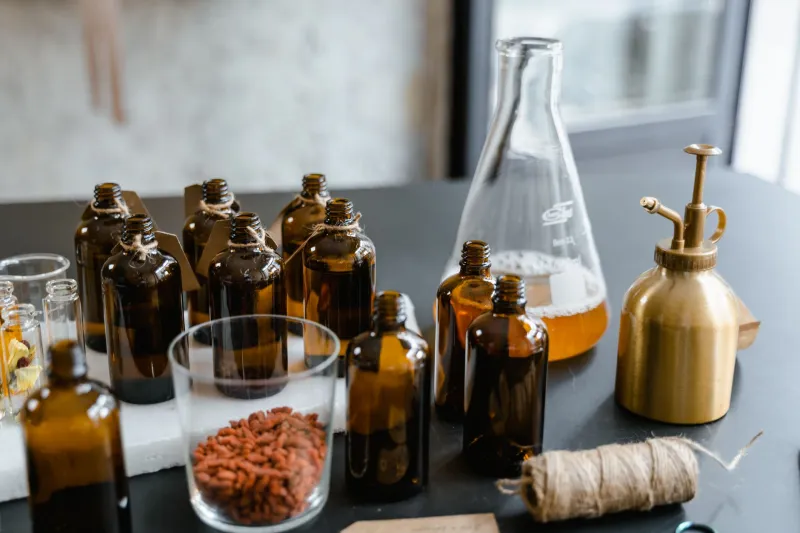
Home distillation doesn't require a professional still or a chemistry degree. A basic steam distillation setup—a large stockpot with a lid, some copper tubing, a collection vessel, and an ice bath—can produce genuinely impressive results when you're working with quality Georgia-grown plant material.
Here's where the humidity plays another supporting role: during the condensation phase of steam distillation, you're trying to cool steam back into liquid. In drier climates, this phase can be inefficient because the surrounding air pulls heat erratically. Georgia's humid air actually creates a more stable thermal environment around your condenser coil, which can help regulate the cooling process and reduce the loss of lighter aromatic fractions that might otherwise escape as vapor.
It's a subtle effect, but experienced home distillers who've worked in both dry and humid climates often notice that their Georgia setups produce a more complete aromatic profile—less of that thin, top-note-only quality that sometimes shows up when conditions are too dry.
Seasonal Windows Worth Marking on Your Calendar
Not all of Georgia's humid months are equally useful for home extraction. Here's a rough breakdown of when to lean in:
Late Spring (April–May): Humidity is building but not yet punishing. This is prime time for floral extractions—Georgia wisteria, honeysuckle, and wild violet. The moderate moisture levels help preserve delicate floral compounds that can degrade quickly in peak summer heat.
High Summer (June–August): Peak humidity, peak aromatic intensity. This is your window for herb-heavy distillations—lemon balm, peppermint, basil, and native bee balm. Work early in the morning to avoid the worst heat, but don't fear the moisture.
Early Fall (September–October): Humidity begins to drop, but the accumulated warmth of the season has pushed many plants into their most resinous phase. Cedarwood, pine, and late-season herbs are particularly rewarding during this window. The slight drop in humidity also makes the distillation process a bit more forgiving for beginners.
A Few Practical Notes Before You Start
Working with humidity is not the same as ignoring sanitation. Moist environments that help your plants retain volatiles are also environments where mold and bacterial growth move fast. Harvest cleanly, process your plant material the same day if possible, and keep your equipment spotless between runs. Georgia's humidity is your friend in the still—not in the storage cabinet.
Also worth noting: the oils you produce at home won't always match the clinical consistency of commercially produced products, and that's fine. What you're making is a living, place-specific product that carries the actual chemical fingerprint of Georgia's soil, climate, and growing conditions. That's not a limitation. That's the whole point.
Working With What You've Got
There's something deeply satisfying about flipping the script on one of Georgia's most complained-about features. The humidity that makes your hair frizz and your AC work overtime is the same atmospheric condition that helps your backyard lemon balm hold its volatile oils until you're ready for them, softens plant cell walls for more efficient steam extraction, and creates a stable condensation environment in your home still.
You don't have to move to Provence to make quality essential oils. You just have to learn to read the place you're already in. And in Georgia, the air itself is trying to help you—if you know how to let it.