One Bite Back: How Georgia's Heirloom Flavors Unlock Memories That Imported Food Never Could
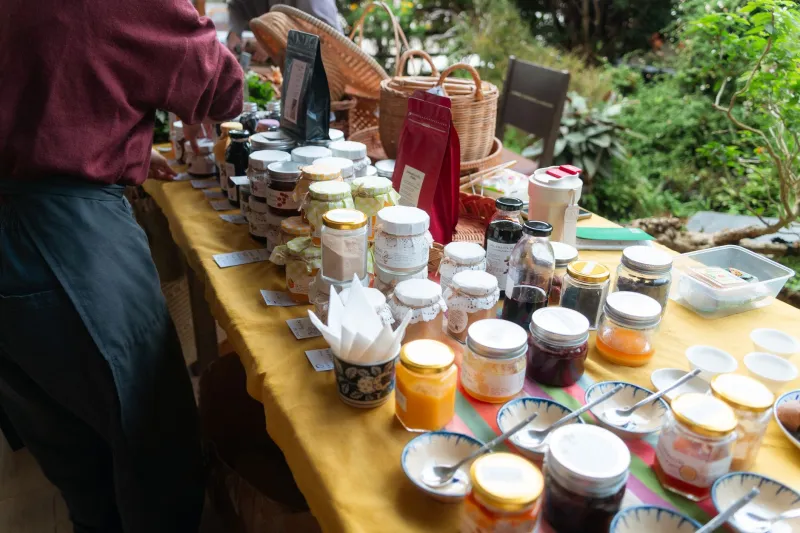
It doesn't announce itself. One moment you're standing in a farmers market in Savannah, reaching for a jar of muscadine preserves, and the next you're eight years old and barefoot on your grandmother's back porch, watching the August heat shimmer over the garden. The smell hit first. Then the taste confirmed it. And for a few seconds, time genuinely stopped.
This isn't nostalgia in the soft, greeting-card sense. It's neuroscience. And Georgia's heirloom and foraged botanicals trigger it more reliably — and more powerfully — than almost anything else on the food landscape.
Why the Brain Treats Smell and Taste Differently From Everything Else
Every other sense — sight, sound, touch — routes through the thalamus before reaching the cortex for processing. Smell doesn't. Olfactory signals travel directly to the amygdala and hippocampus, the brain's emotional core and primary memory storage center. Taste, which is deeply intertwined with smell (most of what we experience as flavor is actually aroma), gets pulled into this same pathway.
The result is what neuroscientists call involuntary autobiographical memory — the Proustian moment, named after Marcel Proust's famous madeleine passage — where a sensory trigger bypasses conscious thought and deposits you directly inside a specific memory. Not a summary of it. The thing itself: the light, the temperature, the feeling.
What makes Georgia's regional botanicals particularly potent triggers is specificity. A muscadine grape grown in Georgia's red clay soil has a flavor-scent profile that is genuinely different from a generic grape or even a muscadine grown elsewhere. That specificity means the brain encodes it as a unique sensory fingerprint. When you encounter it again — even decades later — the match is precise enough to unlock the whole memory.
The Flavor Fingerprint of Georgia's Soil
Food historians and botanists who work with Georgia's heirloom varieties keep returning to the same observation: terroir isn't just a wine concept. It applies to every aromatic plant grown in a specific place.
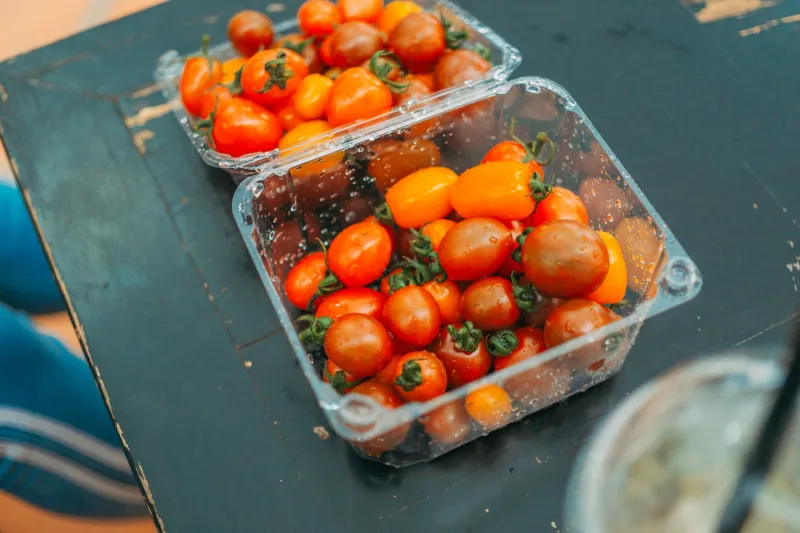
Georgia's red clay soil is iron-rich and slightly acidic, creating mineral uptake patterns in plants that directly influence their volatile compound profiles. A Georgia-grown Cherokee Purple tomato develops different concentrations of glutamates and aromatic aldehydes than the same variety grown in California. Sourwood honey — made from bees working the sourwood trees of North Georgia's mountain hollows — has a flavor profile so specific that beekeepers describe it as almost impossible to replicate anywhere else. The anise-like sweetness, the faint caramel note, the way it lingers: that's the Appalachian microclimate expressing itself through the plant and into the food.
For people who grew up eating these things, those flavors became the baseline definition of what food tasted like. Which means encountering them again — after years of eating commercially produced, geographically anonymous food — hits with the full force of contrast.
Real Georgians, Real Moments
Margaret, a retired schoolteacher from Macon, describes the first time she tasted a properly grown field pea in about thirty years. "I was at a church supper and someone had brought purple hull peas cooked with a piece of smoked fatback, the old way. I took one bite and I was back in my mother's kitchen so fast it almost made me dizzy. Not the memory of it — I was there. I could hear the screen door."
That kind of sensory precision is what separates a Georgia-grown botanical from its generic counterpart. The specificity of the flavor is the key that fits the lock.
James, a food historian based in Athens who has spent fifteen years documenting Georgia's heirloom seed traditions, puts it plainly: "When we lose a variety, we don't just lose the flavor. We lose the memory trigger. There are whole emotional histories attached to specific plants that exist nowhere else. A Bradford watermelon doesn't just taste good — it tastes like a particular version of Georgia that's disappearing."
The Botanicals Most Likely to Take You Somewhere
Not every plant carries equal memory weight. The ones that tend to produce the strongest involuntary recall share a few characteristics: they have highly distinctive aroma profiles, they were historically specific to a region, and they were commonly encountered in childhood rather than adulthood.
Muscadine grape tops almost every list. Its musky, wild sweetness is unlike any cultivated grape, and its presence in Georgia goes back centuries. Muscadine jelly, wine, and fresh-picked grapes are among the most consistently reported memory triggers for people who grew up in the South.
Sourwood honey is another. Its anise-forward complexity is so specific to North Georgia's mountain ecosystem that people who grew up with it on their biscuits describe other honeys as simply wrong-tasting by comparison.
Wild persimmon, foraged from Georgia's roadsides and field edges, carries a flavor that commercial Fuyu persimmons don't come close to replicating — a complex, almost winey sweetness that comes only after the first frost softens the fruit.
Field peas — purple hull, crowder, and zipper cream varieties — carry enormous memory weight for generations of Georgians, particularly when prepared in traditional ways with smoked meat and pot liquor.
Pawpaw, the large native fruit that grows along Georgia's creek bottoms and is making a slow comeback through foraging culture, produces a custard-like tropical flavor that people who've tasted it once tend to search for the rest of their lives.
How to Use This Intentionally
Once you understand what's happening neurologically, you can use it deliberately — both to preserve your own family food traditions and to introduce younger generations to flavors that carry ancestral wellness knowledge.
Start a seed library of heirloom varieties your family historically grew. Even a single Cherokee Purple tomato plant in a container garden creates an annual sensory anchor that keeps a memory alive and transmittable. Cook with the botanicals your grandparents cooked with, using their methods — not because it's more authentic, but because the full sensory experience (smell of the cooking, texture, taste) encodes more richly than a simplified modern version.
When older family members are present, cook the foods they grew up eating and pay attention to what happens. The conversation that follows a powerful taste memory is often the most honest food history you'll ever hear.
And if you encounter a Georgia-grown botanical at a farmers market or roadside stand that stops you for a moment — buy it. Whatever your brain is trying to tell you, it's worth listening to.