Grandma's Kitchen Was the Medicine Cabinet All Along: Southern Food Remedies That Still Hold Up
There's a particular kind of knowledge that doesn't get written down. It lives in the muscle memory of a hand stirring a pot, in the way a grandmother sniffs a jar of dried herbs before adding a pinch to a simmering broth, in the casual confidence of someone who has never once doubted that food is medicine.
In Georgia, that knowledge runs deep. This state has always been a crossroads — of Indigenous healing traditions, West African herbalism carried here under the most brutal circumstances imaginable, Scots-Irish Appalachian folk medicine, and the practical ingenuity of people who couldn't always afford a doctor and made do beautifully with what the land provided.
Modern wellness culture — with its adaptogens and tinctures and artisanal essential oil blends — is, in many ways, just catching up to what Southern grandmothers never stopped doing. Let's talk about some of those time-tested remedies and why they deserve far more credit than they typically get.
"We Didn't Call It Aromatherapy. We Called It Supper."
Ruth Elaine Dawson, 81, grew up in a farmhouse outside of Macon and spent most of her childhood watching her grandmother work the kitchen like a surgeon. "She knew exactly what to cook when somebody was feeling off," Ruth told us over the phone, her voice still carrying the warm cadence of Middle Georgia. "Wasn't any mystery to it. You had a cold, she made a pot of something. You had a stomachache, she made something else. It was just what you did."
That matter-of-fact approach to food-as-medicine is something herbalists and food historians are increasingly recognizing as sophisticated, culturally embedded wellness practice. "These women were practicing a form of clinical nutrition and aromatherapy simultaneously," says Atlanta-based herbalist and food historian Camille Okafor. "The steam from a pot of ginger broth is delivering volatile compounds directly to the respiratory tract. The honey in a remedy tea is antimicrobial. These aren't accidents — they're accumulated wisdom."
Honey: Georgia's Oldest Pharmacy Product
Georgia is a major honey-producing state, and raw local honey has been a cornerstone of Southern home remedies for as long as anyone can remember. The applications were specific and intentional: a spoonful stirred into warm water with lemon for a cough, a thin layer spread over a burn or minor wound, a jar kept on the shelf through cold and flu season like a first-aid kit in amber.
What makes raw honey particularly powerful — and what your average grocery-store variety largely lacks — is its concentration of enzymes, antimicrobial compounds, and bee pollen. Local Georgia honey also carries trace amounts of regional pollen, which some practitioners believe may help the body adapt to local allergens over time. (It's a folk claim that mainstream allergists debate, but generations of Georgians swear by it.)
The remedy is simple. The science behind it is increasingly solid. And the honey is better when it comes from a beekeeper you can actually meet.
Try this: Warm Honey & Apple Cider Vinegar Tonic — 1 tablespoon raw Georgia honey, 1 tablespoon unfiltered apple cider vinegar, juice of half a lemon, and 8 ounces of warm (not boiling) water. Stir and sip slowly. It's tangy, a little sweet, and genuinely soothing on an irritated throat.
Ginger Broth: The Southern Cure-All That Predates Chicken Noodle
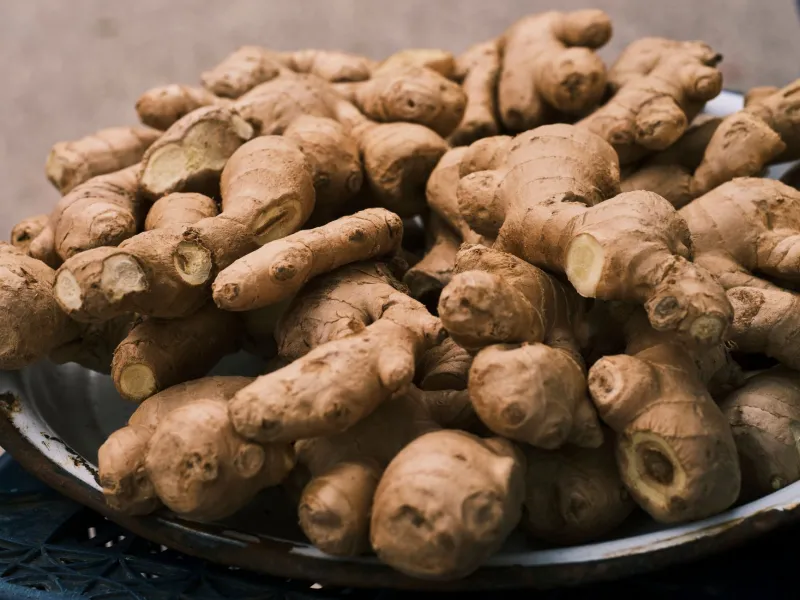
Before Campbell's Soup became the default sick-day food, Southern cooks were making broth from scratch and loading it with ginger — a practice that traces back to both West African culinary traditions and Indigenous medicine. In coastal Georgia and the Sea Islands, ginger was a staple ingredient in the Gullah Geechee kitchen, used not just for flavor but for its well-documented effects on digestion and nausea.
Ginger contains gingerols and shogaols — active compounds with real anti-inflammatory and antiemetic properties. A strong ginger broth isn't just comforting; it's doing actual physiological work. The steam alone carries aromatic compounds that open airways and calm the nervous system. This is aromatherapy happening at the dinner table.
Grandmother's Ginger Broth (adapted for the modern kitchen)
- 6 cups good chicken or vegetable stock
- One 3-inch knob of fresh ginger, sliced thin (don't bother peeling it)
- 4 garlic cloves, smashed
- 1 tablespoon apple cider vinegar
- Salt and a generous pinch of cayenne
- Optional: a handful of fresh turmeric root, sliced
Simmer everything together for 30 minutes. Strain and drink it from a mug. It's not glamorous. It works.
Turmeric in Unexpected Places
Here's something that might surprise you: turmeric has been showing up in Southern cooking for a lot longer than the golden latte trend would suggest. In Georgia's Lowcountry communities and in certain Appalachian traditions, turmeric — sometimes called "Indian saffron" in old recipe books — was used to color rice dishes, season pickles, and add warmth to cornbread and stews.
Its anti-inflammatory properties are now widely studied and documented. Curcumin, turmeric's primary active compound, is one of the most researched natural anti-inflammatories in existence. Southern grandmothers didn't know the word curcumin, but they knew that a pinch of that yellow powder in the cornbread made people feel better in winter. That's not a coincidence. That's knowledge.
Try adding a teaspoon of ground turmeric and a pinch of black pepper (which dramatically improves curcumin absorption) to your next batch of cornbread batter. It gives the bread a beautiful golden color and a subtle earthiness that pairs wonderfully with honey butter.
Vinegar, Peppers & the Art of Preservation as Medicine
Fermented and pickled foods have always held a place of honor in the Southern kitchen, and the health rationale goes beyond just making summer vegetables last through winter. Fermented foods support gut microbiome diversity. The capsaicin in pickled peppers has analgesic and circulation-boosting properties. The acetic acid in vinegar has been studied for its effects on blood sugar regulation.
In rural Georgia kitchens, a jar of pepper vinegar on the table wasn't just a condiment — it was a digestive aid, used in small doses to stimulate appetite and ease sluggish digestion. Fermented vegetables were eaten daily, not as a health trend but as a matter of course. The gut health movement has essentially rediscovered what the Southern preserving tradition never abandoned.
Pine Needle Tea and the Forest Pharmacy
This one surprises people. Long before vitamin C supplements existed, Indigenous peoples of the Southeast — and later, the settlers who learned from them — brewed tea from young pine needles as a remedy for scurvy, fatigue, and respiratory congestion. Georgia's longleaf pine forests made this a particularly practical remedy in the region.
Young needles from Eastern white pine and longleaf pine are high in vitamin C and contain aromatic compounds that support respiratory health. The tea has a clean, resinous flavor that's genuinely pleasant once you adjust your expectations. It's also one of the most direct connections between Georgia's landscape and its healing traditions — forest aromatherapy in a cup.
Important note: Only use needles from species confirmed to be safe for consumption. Avoid yew, Norfolk Island pine, and ponderosa pine. When in doubt, consult a local herbalist before foraging.
What We Stand to Lose — and Reclaim
Camille Okafor puts it plainly: "We've been taught to distrust this knowledge because it came from women, from Black and Indigenous communities, from people who didn't have medical degrees. But the track record speaks for itself. These remedies persisted because they worked."
The wellness industry has done a remarkable job packaging ancient wisdom into modern products — and there's nothing wrong with that, as long as we remember where the wisdom came from. The raw honey in that artisanal throat spray? Grandma had it first. The ginger in that boutique digestive supplement? It was in the broth on the back of a Georgia stove a hundred years before the capsule existed.
Reclaiming this heritage isn't about rejecting modern medicine. It's about honoring the full picture of what healing has always looked like in the American South — practical, rooted, flavorful, and deeply, stubbornly alive in the kitchens of the people who kept it going.
Next time you're feeling run down, maybe skip the pharmacy aisle and open a cookbook instead. Or better yet, call your grandmother. She probably already knows exactly what you need.